
“I’m sitting on a beach…staring at the sky and letting the tidal pull of my own future wash over me and draw me forward.”
~ Roseanne Cash
Where I Started
This was the very first post I wrote on my blog on January 12, 2013. I write about my rock bottom with rheumatoid arthritis and the beginning of reclaiming a beautiful life. If you are at rock bottom right now, I want you to know there’s hope. For updates on my journey, scroll to the bottom of the post.
Onset
One morning, one year ago, I put on my shoes and noticed the side of my foot hurt, right at the base of my pinky toe, and I thought, ‘Well, that’s weird,’ and went to work. Then a few mornings later, I got out of bed and it hurt to stand on that foot; the whole ball of my foot was tender. So, I went to work and gave myself a detailed foot and calf massage (sometimes it helps to be a massage therapist; sadly this time it didn’t diminish the pain).
A few days later, the pain spread to my other foot, and I tried all sorts of things over the coming weeks – icing my feet, Epsom salt baths, orthotic supports, stretching, chiropractic adjustments, acupuncture, getting worked on by other bodyworkers. Nothing helped, and soon I was taking ibuprofen to get through the workday, and I simply hoped the pain would go away with time. Shoes became uncomfortable because they felt small on my feet, so I switched to sandals.
Then the pain moved to my hands – one finger at a time would stiffen up; I couldn’t bend it, and any pressure hurt; it would stay swollen for a few days, fade away, and another finger would swell and take its place. As soon as it hit my hands, I knew what was happening, but denial’s a powerful thing. I took more ibuprofen and kept working, creatively avoiding using whichever finger was swollen that day. Then one night, my shoulder seized up, with such excruciating pain that I couldn’t sleep and I couldn’t move without gasping and crying. Denial was over. It didn’t take much research to learn that I was a textbook example of rheumatoid arthritis.
Over the next few months, the joint flares ricocheted around my body unpredictably, putting a wrist into a splint one day, a shoulder into a sling another; freezing my knee so that I couldn’t walk one night, freezing my jaw so that I couldn’t eat on another. On top of that, there was a growing stiffness in my body, especially in the mornings, where it hurt to move at all. Some stiffness would last the entire day; I felt like I was 90 years old, instead of 43. I became more and more tired, and also developed severe dry mouth, which is another common symptom of rheumatoid arthritis. I cried every day, as my husband held me and kissed my tears away.
Dietary Healing
I hoped to avoid immunosuppressant medication. I spent hours on the internet, researching alternative solutions and every website led me to a discussion of leaky gut syndrome, and healing through diet. This didn’t come as a surprise to me. I had digestive pain on and off my whole life, and it had gotten worse in the prior year. The notion that we are what we eat makes sense to me; food is the one medicine we all take every day to survive. Although I ate a relatively healthy diet, it was far from perfect, and included all the big culprits: wheat, sugar, and packaged foods (the fact that they were bought at the health food store notwithstanding.)
So, I began my experiments. First, I gave up sugar and wheat, and I felt better for a few days, but the pain returned. Then I tried a rotation diet, which had no impact whatsoever. So, I tried an elimination diet, removing foods one at a time. I always got better for just a few days, before the pain returned again. It seemed my body reacted to everything I ate, and I started to fear food. That’s when I learned of the GAPS Diet by Dr. Natasha Campbell-McBride. She says this about food allergies and intolerances:
“Many people try to identify which foods they react to. However, with damaged gut wall they are likely to absorb most of their foods partially digested, which may cause an immediate reaction or a delayed reaction (a day, a few days or even a couple of weeks later). As these reactions overlap with each other, you can never be sure what exactly you are reacting to on any given day. Testing for food allergies is notoriously unreliable: if one had enough resources to test twice a day for two weeks, they would find that they are “allergic” to everything they eat. As long as the gut wall is damaged and stays damaged, you can be juggling your diet forever removing different foods and never get anywhere.”
That seemed to summarize my experience completely. The GAPS Diet is a temporary diet, designed to heal your gut, and therefore your body, with the expectation that you can transition off the diet once your body has healed. It’s a very restricted diet, so the fact that it was temporary appealed to me, and when I compared a lifetime with an autoimmune disease to two years on this diet (the average time it takes an adult to heal), that seemed like a very fair trade.
Results:
- Within a week of starting the diet, the flares began to diminish in number and intensity, and my shoes fit again.
- Within a few weeks, the severe dry mouth went away, my bodywide stiffness lessened, my energy increased, and I returned to work part-time. (Caveat: I didn’t have the strength for massage therapy, but I specialize in lymph drainage and craniosacral therapies, which are light touch healing modalities. I returned to work in that capacity.)
- Within a few months, flares became rare, and when they did come, they were moderate. My bodywide stiffness became intermittent, usually worse on days when storm fronts moved through town. My energy levels returned to normal and I went back to working full days.
- My health improved in other ways as well. For the past 3 years, I had been experiencing perimenopausal symptoms: menstrual irregularity, water retention, mood swings, headaches, and cramps. They all went away with this diet. I also had chronic styes around my eyelids for the past decade, and they cleared. People began to compliment me on my skin, telling me it glowed. And all digestive pain dissolved.
- 5 months later, what remained was a low-grade inflammation in my joints, preventing their full strength and flexibility, but with improved range of motion and significantly less pain than prior to the diet.
- I was 99% compliant on the diet, the only exceptions being when we traveled and I couldn’t control all of the ingredients in my food. Pain is a strong motivator; I wanted relief too much to cheat.
Complementary Treatment
You’ll notice that my website talks about healing through diet…and more. This is because the authors of the healing diets all recommend complementary practices to support the healing process. It might be exercise, detoxification, supplements, or sunshine. I’ll talk about their recommendations more when I contrast and compare the diets in my next blog post. For now, I’ll tell you what I have done (and continue to do) to support my dietary healing:
- Over the summer, I sunbathed for 30 minutes daily whenever possible, to obtain Vitamin D. There is a link between Vitamin D deficiency and autoimmune disease.
- I take the following anti-inflammatory supplements: black currant oil, curcumin, krill oil and cat’s claw. Combined with my diet, these supplements have allowed me to drop to just one aleve tablet twice daily.
- Magnesium is very hard to get through food, so I take this supplement to boost my levels and prevent the leg cramps that are common with autoimmune conditions.
- The GAPS Diet does recommend probiotics and digestive enzymes, but gives you the option of getting them through food or supplements. I chose food: raw unpasteurized sauerkraut doubles as both.
- I meditate daily. When I was in the most pain physically, it was the hardest to bear emotionally. Meditation was the one thing that made me feel better. It wouldn’t alleviate my physical pain, but it replaced emotional turmoil with a feeling of peace. I’ve come to love that feeling, so even though I don’t need it for the same reasons now, I continue to meditate every night.
- I’m part of a wonderful community of bodyworkers, and they, along with my clients, family and friends, have been beautifully supportive of me during this process. My body is too sensitive at this point to enjoy receiving massage, but I found I wanted the comfort of turning my hurting body over to someone else for an hour, to be nurtured and cared for by another professional. I chose the gentleness of energy work. These sessions weren’t curative, but they were supportive and always left me feeling lighter and loved.
- I try to do something detoxifying at least a few times per week: juicing, detox baths, lymphatic self-care, coffee enemas, etc.
- Exercise has been a challenge. When the rheumatoid flares were at their peak, almost any activity would set them off. Now, I find that I enjoy exercise, so long as its moderate. My favorite routine is the exercise bike, followed by gentle yoga. As someone who used to love strenuous hiking, kayaking and strength training, I hope to get back to those activities someday. In the meantime, I’ve learned to accept what my body needs now, which is gentleness, not strain.
Next Steps
5 months into the GAPS Diet, I hit a healing plateau. I felt much better than I had before, but was no longer moving forward. In my research into alternative healing, I learned about a drug called Low-Dose Naltrexone (LDN). It’s a very mild medication rarely used by rheumatologists, but often recommended by alternative health practitioners in combination with dietary healing. A 50mg dose of Naltrexone was originally created to help heroin addicts through withdrawal. Surprisingly, they learned that a low dose of this medication (1.5 – 4.5mg) helped regulate the immune response in people with autoimmune disorders. At such a low dose, most people don’t experience side effects. Some people even go into remission on this drug. That didn’t happen for me, but I would say the LDN reduced my morning stiffness. It’s enough of an effect that I’ll keep taking it, but I need to do something else to relieve the inflammation altogether.
So, what’s next? At the peak of my rheumatoid pain, I felt like huge waves were rocking through my body and knocking me onto a rocky shore. Now, I can still feel the waves, but they’re growing smaller and smaller. My goal is to reach “still waters”. I’m going to continue with the GAPS Diet, but I am adding the Paleo Autoimmune Protocol. My hope is that I will be able to identify the remaining foods that are causing the last of the low-grade inflammation.
Simultaneously, I’m starting this blog. I want to join the growing testimonials of people with autoimmune conditions who are improving their autoimmune health through diet. This journey has been life changing, and I want to share what I’ve learned (and continue to learn) along the way. In pharmaceutical trials, a medication is considered effective if it reduces symptoms even by 25%. Dietary healing has reduced mine by about 80%. I went from living with an excruciating level of pain, to a manageably low level, and more healing will come.
Tom & The Turtle
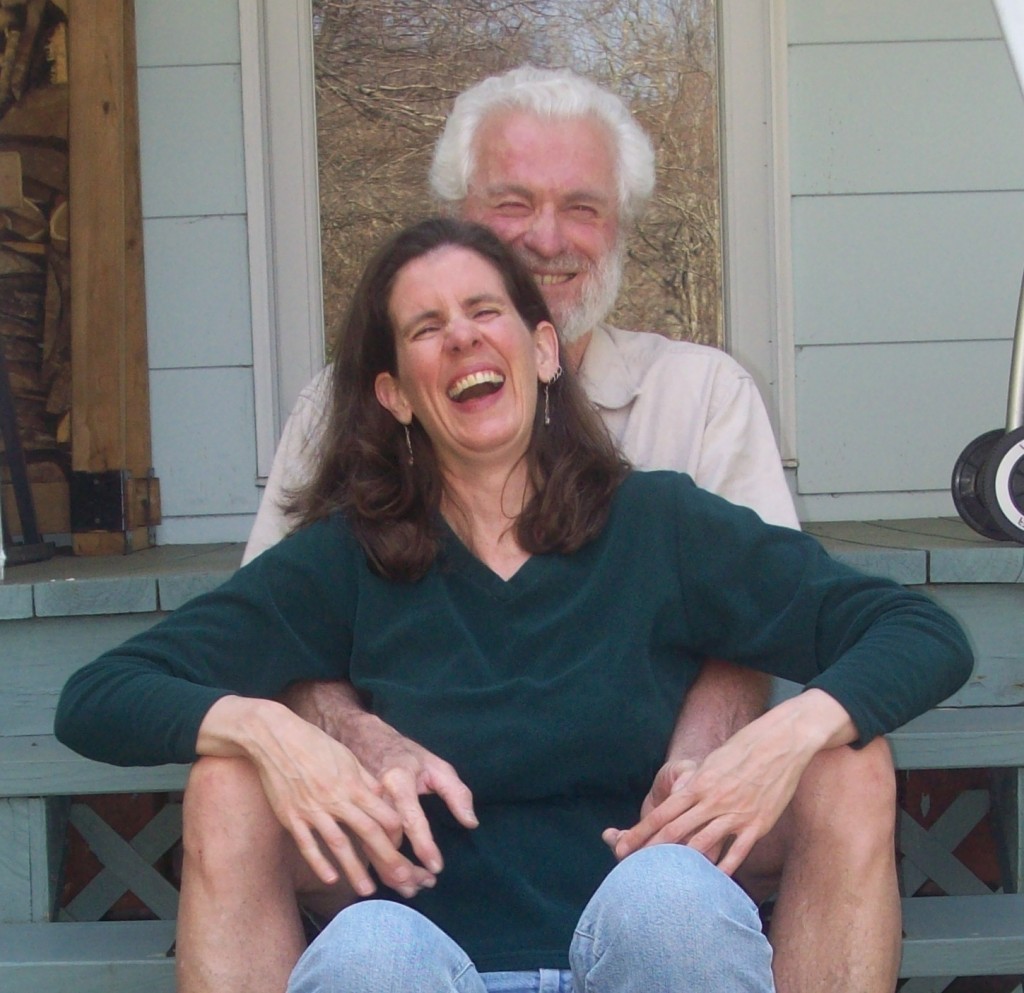
I realize this post is long, but I want to end it with two photos. The first is my favorite picture of me and my husband, Tom. This is the man who kisses my tears away, and far more often, makes me cry with laughter:
And this is a photo of us scuba diving this summer, one month into the GAPS Diet. We had planned the trip a year in advance and chose not to cancel. We drove from NC to FL, carrying a cooler of food with us, and renting a condo with a kitchen, so that I could stay on the diet. Although the healing had begun, I was still experiencing flares, and the road trip was difficult. At the same time, we both needed to experience something beyond my illness. Scuba diving with sea turtles was on our “life list”, and it was worth the struggle, to experience this wonder and joy:
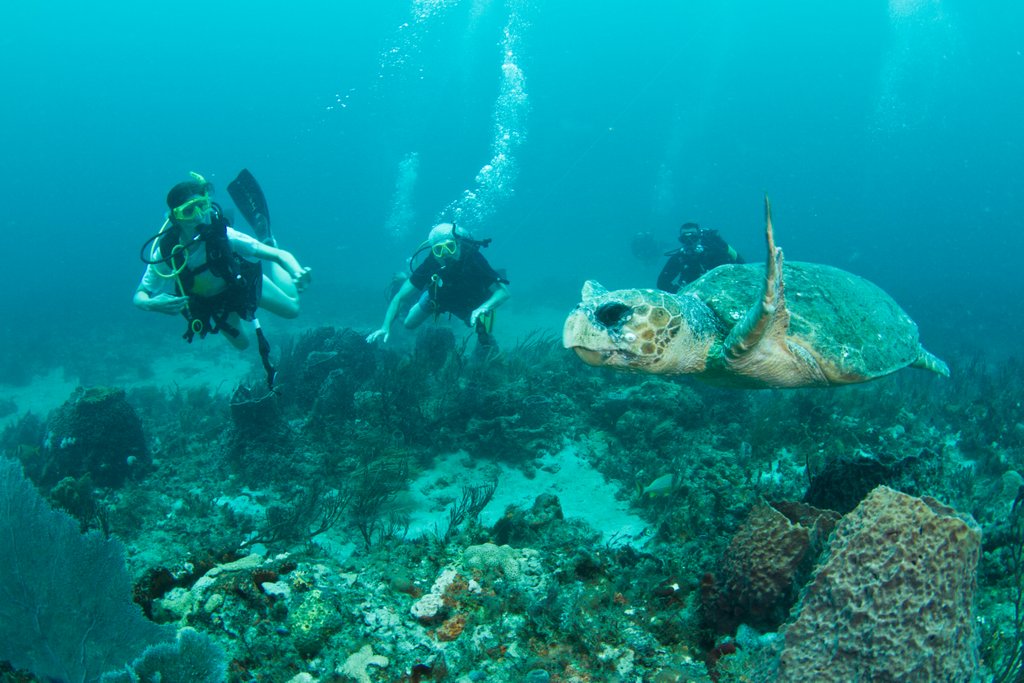
Advice from a Sea Turtle:
Swim with the current
Be a good navigator
Stay calm under pressure
Be well traveled
Think long term
Age gracefully
Spend time at the beach
(quote from a magnet we bought in Florida)
Updates
This is my very first blog post, and showed where my story began. Since then, many years have passed. Here are some updates to my healing journey:




I’m struggling with the emotional side of all this. Starting about 10 years ago was when I really had a physical and emotional breakdown. Went through several years of doctors and diagnoses (psoriatic arthritis, hashimoto’s, and ms) and now feel like I am physically feeling better. And I have some resources I know could help me feel even better than I do now.
So I should have hope. But it’s hard. I always run into these people who successfully physically and spiritually/emotionally healed “getting back to a vibrant life.” But I think I started with these AI issues in middle school and never felt well. My early life was not terribly happy either. While I love my family, they are not truly a source of support. My career got derailed when I started really getting sick a year after getting married. My husband is amazing, but he’s also missed out a lot because of my issues. We haven’t been able to start a family either.
Is there anyone out there who feels like they successfully restarted their life in their late 30s? How did they do it? How do you stay positive and hopeful when you’ve never had a truly “vibrant life”?
Emily, thank you so much for being brave and vulnerable in sharing your story. I can guarantee you that you aren’t alone. People rarely get to a finish line of perfect emotional health and happiness. It’s a journey with fluctuations, and there are lots of tools to help us along the way. The first suggestion I have is to not compare your journey to anyone else’s. The truth is, we rarely know what’s going on inside another person’s body and soul. My second suggestion is to be gentle with yourself, and approach this journey in baby steps rather than setting a standard of perfection. Third, I recommend the book Childhood Disrupted. It speaks to your experience of developing AI issues simultaneously with a difficult childhood, and offers tools and suggestions to begin healing from that rough start. Gentle hugs to you!
Congratulations to you on trying a different avenue then drugs! I have had a similar experience. I was diagnosed with autoimmune hepatitis in 2015. First i used the prednisone and azathioprine to get the inflammation under control. But then knowing this was what the doctor wanted me to be on for the rest of my life I chose to see a naturopath doctor. She helped me by recommending some diet changes and herbs along with the LDN. I have been able to get off both of the doctor prescribed drugs and am feeling so much better! I am so glad I decided to try to improve my health.
That’s wonderful, CAJ. Some people respond really well to LDN; I’m so glad that’s true for you! And even when people aren’t able to eliminate conventional medication completely, diet & lifestyle can still make a huge difference in improving quality of life and helping medication work more effectively by reducing the inflammation at its root. Either way is a success and far more empowering than feeling victims to our illness. Wishing you a lifetime of abundant health!
Hi,
I know this is such an old post but I am grasping to try to find out where I can go to have LDN prescribed for my daughter. She is 2.5 and was DXd in June with severe poly-JRA. She has erosion in her neck already as well. We have made dietary changes and saw some improvement (although we haven’t tried gaps, just AIP, and reading your post makes me think we ought to try gaps!). She was put on Enbrel but we were told at her last appt that it wasn’t working, so they’ve switched her to Humira but we’ve had a heck of a time getting it. As we’ve waited I came across LDN, and after reading medical journals and stories of how it has helped so many with autoimmune disorders, I want to try her on it before we try Humira. However, her pediatric rheum won’t prescribe it as she said it’s still experimental for JRA. I told her we were willing to experiment but she still isn’t willing to prescribe it.
Does it have to be a rheumatologist who prescribes it? Or can we perhaps find someone else to?
I’d appreciate any thoughts you have on this! My sweet girl is having such a hard time and I’d love for there to be an option aside from biologics. They have so many terrifying potential side effects!
Hi Alex. My heart goes out to you and your daughter. Any MD can prescribe LDN. It doesn’t have to be a rheumatologist. Here’s a list of LDN-prescribing doctors: http://www.ldnresearchtrust.org/LDN_Prescribing_Doctors. And I dedicated a podcast to LDN, which I recommend you listen to for details on dosing and learning more about how it works: Episode 39: LDN with Dr. Thomas Cowan. Wishing you and your daughter wellness in every way!
Thank you very much for your suggestions. I was having water and coconut milk kefir since last week and have been completely keeping away from diary. Being diagnosed with irritable bowel syndrome this week, doctor has prescribed medicine(having HCL and enzymes) to have few minutes before meals. I am determined to stay on AIP for 3 months and not planning to reintroduction phase until I see some relief during elimination phase. I will also try to count down the intake of fermented foods and check if that helps. Thanks again for your kind words.
I started Aip 10 days ago and have been following the diet with organic bone broth, organ meat, fresh organic vegetables, kefir etc. But I had diarrohea twice and now facing swelling in fingers and toes every morning. I have hypothyroidism and was diagnosed raynaud’s syndrome lately along with lower back muscle spasm. I prefer to continue the diet for another 6 weeks as planned but wondering if I am aggrevating any health condition by being on aip diet?
Hi Rebecca. Usually it’s our autoimmune disease causing those symptoms, not the AIP, and the diet just hasn’t had enough time to start reversing those symptoms yet. You might want to stop the kefir. If it’s dairy, that’s not allowed on the AIP. If it’s coconut or water kefir, that’s fine, but some people do react strongly to fermented foods if they’ve never had them before. If that’s the case with you, removing them will let you know.
Hi Eileen. I was wondering if you are still using LDN?
Hi Meg. I do, but honestly, the improvement I got was very minor, and I’ve considered stopping it. I would say it acts similarly to the supplements I take (like curcumin and cat’s claw) – they reduce the inflammation a little bit (and every little bit helps), but not enough to make a dramatic difference. Diet and lifestyle is what stopped my flares (the AIP specifically). But I know some people have had much stronger results from LDN, so it’s worth a try!
I was diagnosed with RA about 3 weeks ago after having a pretty miserable January & February during which I had 5 to 7 flare ups with one or both hands swelling up so badly I couldn’t use them and being so painful that the first night of each flare up I would end up sitting up in a chair all night – or walking around – and wishing I could cut my hands off. In retrospect I can see that perhaps there had been milder symptoms for quite some time. I stumbled on your blog by Googling “bone broth and RA,” having instinctively, I guess, made a batch of bone broth a couple of days ago. I eliminated wheat (and most other grains) several months ago, and have eaten a mostly low carb diet for many years – going more and more in the direction of true Paleo, having eliminated milk products (except for Kerry Gold butter), in the past couple of months. Appears I now need to be even more rigorous. Your blogs and website are an encouragement to me. Thanks,
Devona, I remember that pain very well. I’m so glad you found my blog. Wishing you healing on every level!
Thanks. 🙂
Hi! I found your website today and also commented on your article about chocolate.
I’m an 18 year old with problems only 40 year olds should have!!!
I have heard a lot about the healing powers of foods but it is so hard on a college campus (in Michigan especially).
I’ve already read four or so of your articles and they’re everything I’ve been discovering in the past year or so – and so much more!
I really admire your lifestyle and the picture of you and your husband is darling.
A little about me: I’m paleo (as much as possible) and struggle with GAD with I guess you could say depression. I’m trying so hard to get better but when I can’t control my diet and the Michigan weather covers up the sun… I feel like I’m fighting a lost cause..
Do you have any recommendations for me?? Salads are boring and I try to meditate every day. I haven’t noticed EFT helping me.
Your story is an encouragement and I hope I too can find my way to recovery.
My first advice is to congratulate yourself that you’re trying, and that you are aware of the power of food. At age 18, I was nowhere near as enlightened as you! As for college advice, here are two great articles: A College Guide to Eating Healthy and Paleo for College Students. And if you want to really hold yourself accountable, consider starting your own blog. You could inspire others, while staying on track yourself!
So grateful to have your site. I have been diagnosed with psoriatic arthritis. I have tried so so many diets, bodywork , etc. I went for 8 months with strict diet and there was virtually no change. The only thing is I still ate gluten free grains and did not try the fermented foods.. I amy go back and try without any grains to see what occurs. I had been on methotrexate for 18 yrs when it stopped working. I had tried many treatments before the med. I will not go on biologic drugs. I have a bad feeling about them for me. I keep searching and searching…while I am in pain and on disability. I have read that most people’s experience with fermented foods and psoriasis is not good as the fermentation can flare the skin. I can try the grain free aspect though. Do you know about black cumin seed oil. I read great things about it. I have tried once but gave me bad stomach cramps. I need to find a way to try again. Thanks for being here!
Hi Cindy. My heart goes out to you – I know about pain. I think going grain-free is a good idea, and you can certainly do that without fermented foods. Although I do well with ferments, I know some people have trouble. If that doesn’t give you results, I would suggest the autoimmune protocol next. I’ll be posting an article next week on my experience; it made a huge difference for me. As for black cumin seed oil, I don’t have experience with that. Thanks for writing.
Just discovered your blog. You have given me much hope.
I was diagnosed with RA in July of 2012. I had been trying natural methods for a year but now almost all of my fingers have turned into swan necks and I have nodules popping up all over my body. My integrative doctor recommended I go back to the RA doc and start taking methotrexate. I have been taking LDN for 6 weeks and that does seem to help.
I’ve been on the anti-inflammation diet for 6 months with little change. I’ve been taking tumeric, holy basil, boswellia, omega 3’s all to bring down the inflammation but the RA doc says I must stop them for fear they will cause problems with the drugs/ liver.
I am wary of the diets high in meat as I have read 3 different doctors who say animal protein can trigger RA. It’s all so confusing. How does one know what to do?
Hi Barb. Thanks so much for writing. I’m not sure what your current diet is, but I’m guessing it’s quite different from mine, since you’re nervous about meat intake. I’ve been eating meat daily for a year, and my RA symptoms have reduced by 90%. If meat triggered RA, I wouldn’t have had this kind of success. Unfortunately, doctors often state opinions as if they’re scientific fact. There’s a whole network of paleo physicians who would disagree with those 3 doctors. I do eat mostly organic/grassfed meats, rather than conventional, and I eat a lot of vegetables as well. Paleo isn’t a meat-only diet; it’s just that meat contains nutrient-density that can’t be found in other foods. If you’ve been on your diet for 6 months and it’s not helping, it certainly can’t hurt to try mine. My Getting Started page shows you how. And if you want to learn more about the science behind it, I recommend the book: It Starts with Food. As for the medication decision, many people do both diet and medication to start, and as they heal, they reduce the medication. So, that’s an option, too. Don’t feel like it has to be an either-or choice. In the end, we’re all unique and need to make the choices that are best for us at the time. You can change your mind many times; it’s your body!
Eileen, The kindness of your reply brought me to tears. Thank you for your devotion to helping other heal from the beast which is RA.
My body’s imbalances started with massive edema in my feet and hands. I bounced around between doctors trying to find answers and ended up at an alternative doc. She believed the fact that I had been a vegetarian for 30 years was a problem. She insisted I begin eating meat and fish. I gave in and started with organic turkey and fish. A few months later my fingers started swan-necking. Coincidence? Perhaps.
I read Dr Davis(Wheat Belly), Dr Furhman(Nutritarian), Dr Gregor(Nutrition Facts), and Livestrong.com all stating meat can trigger RA. You may see my dilemma?
I believe your diet works well for you, but I am wary of following that path.
I am beginning a month away from Solanace family. Thanx for that suggestion. Perhaps that will bring some relief.
I know there is more than one path to healing, and hope giving up the nightshades will be a positive step on yours. Gentle hugs, from me to you.
OH this resonates although I have Osteoarthritis and fibro. I have tried the gaument of MD ways and then went to physio, massage, osteo, and then finally cos I really believe a naturopath who took me off all gluten, sugar and dairy. I felt better for about 3 wks, with her supplements. Slowly I started getting muscle aches and reg. gp says Fibro.Naturopath says it is a catch all phrase such as IBS and that GP will help with pain. Sadly and totally against what I want to do, I have gone back on Celebrex cos I am on long term disability and they say I have to comply to a recognized dr not a naturopath. So when they reach their decision, end of Sept. I will be back on the naturpathic way… even though it will be mostly starting over. I am still following all dietary ways, just not using all the supplements. I still take vitD, B complex, glucosamine MSM, but not her other supplements as some react with the meds.
I was very sad when he suggested trying this med but as he and hubby said you need to comply with long term to keep getting your pay. At this time, they are trying to find work for me 3 hrs a day, 3 days a week and should be interesting as I have done nursing for years and can’t go back to that.
Thank to my son for sending me here, he has crohns disease and drinks bone broth daily.
Cindy, thanks for sharing your story. It’s hard getting through the red tape of health care sometimes, but it sounds like you are navigating it very well. The diet is key, and healing takes time. My pain decreased in baby steps. Just make the best choices you can each step of the way. Sometimes that is a combination of conventional medicine and naturapothic ways. I wish you and your son continued healing. I love that you both know about the power of food!
Eileen,
Thank you so much for sharing of your experience and your hard-earned wisdom! It is as helpful as it is encouraging. I wanted to ask you about your transitioning from GAPS to AIP: I have been on GAPS for a year (May 5), with almost no cheating, and have improved dramatically. But not completely, and I have just had an alarming flare up (right around 1 year anniversary!) – my thyroid antibodies went up, real eruption of eczema, and bleeding. So, even though I had been avoiding AIP for the sheer strictness of it (as if GAPS was not hard enough!), I made a decision to do it. The question: when you transitioned to AIP, did you continue to abide by GAPS prohibition of starchy vegetables and tubers (sweet ppts, arrowroot, etc?) Or, did you start eating them, and if so, what were the results? Is there any other advice/observation/tip that you could share, having taken a turn from GAPS to AIP?
Thank you so much, Natalya
And, thank you for your journaling suggestions in the post at Paleo Mom, it was so helpful, and this is how I found your website.
Hi Natalya. Welcome! Like you, I chose GAPS over Paleo AIP, because I didn’t want to get that restrictive if I didn’t have to. So, when I decided I did need to try the autoimmune protocol, I chose to do it as an elimination diet rather than a longterm solution. I also chose to do the core protocol, rather than the expanded one that Paleo Mom recommends. I love the Paleo Mom – you know that – but my recommendation is to only add those extra restrictions if necessary. The core protocol is hard enough, in my opinion. I started AIP on January 1st and began reintroducing foods 6 weeks later. It’s a looooooooong process, so I’m not done yet. When I finish, I’ll write up a post of my experience. So far, I have found that some of the AIP foods I can eat without a reaction, but others are definite triggers and I feel much better when I don’t eat them. As for your question on the starches, I did NOT add those back into my diet. I just incorporated the new AIP restrictions into my GAPS diet. I hope that helps. If you haven’t read my FAQ post on the AIP, I recommend it, because I have a whole section of recommendations to make the AIP as easy as possible. Thanks for writing. It’s nice to meet you.
So great to hear your story. It really gives me hope that one day I can maybe make this dietary change. I am 18 years old and I was diagnosed with RA when I was 16. It has been a hard road since my pain was so high Ive tried all types of medicine including methotrexate and enbrel just so I can find some sort of relief, doctors have also had be on prednisone for years now its only thing that calms my joints. I am desperate for making some dietary changes since steroids are making me gain weight and thinking about a diet my mom proposed which is basically aiming to eat alkaline foods. I want to try different diets but its very hard being away at college and the limited cafeteria food available to me. Any suggestions?
Chloe, thanks so much for writing. I would recommend taking it in baby steps. Go gluten-free first. Gluten has become a problem for so many that your college likely has a gluten-free menu (ask if it’s not posted). For many people, they notice pain reduction just removing that one ingredient. Then, if you decide to take the next step and go paleo, here are two resources for you: (1) A good article about how to maintain a paleo diet on campus, and (2) An entire blog written by college students who are paleo. They know the tricks on how to make it work. It’s awesome that you’re considering a dietary change. I know it’s hard, but the rewards are so worth it – you deserve to NOT be in pain. Gentle hugs to you, my fellow RA warrior.
Howdy!!!! This gives me hope! As a mother and for my daughters future! I/ we struggle with Diet, supplements, restrictions, etc. my daughter was diagnosed with Poly JRA at the age of 9. She will be 13 this Sept. With her being so young I fear/ question how to fully heal her. For her age she is an amazingly strong and well educated with diet etc. she is GF, EF, DF …. We eat Organic and mostly non GMO. Still, she is young and she has her days. This way of eating would not be her choice. Granted, I know she knows the difference between this way & what drugs such as enbrel and methotrexate make her feel. She also takes LDN. I know that lDN has allowed her the time to heal slowly and change diet and be off all Ned’s for the last 2 years. Still, she suffers from small flares , headaches and fatigue. I know there is more I can do for her …… But it’s timing and age. She is so thin. Any help or suggestions would be much appreciated! Xo. Thank u. Your story is amazing! Shelsea
First of all, you’re doing a lot already. You’re an amazing Mama, and you should feel proud! Thanks so much for sharing your daughter’s story. Here are a few suggestions: (1) Subscribe by email to this blog, so that you’ll receive notice of the articles I post. Since my focus is autoimmune disease, all topics should apply to your situation. There’s a little box in the right-hand column where you can sign up. (2) Here’s a link to some weight gain shakes. If you scroll down the page, you’ll see one called Paleo Autoimmune. That should meet your daughter’s food restrictions. If it’s not sweet enough for your daughter, feel free to add some raw honey or organic juice. (3) When you say GF, is that gluten-free or grain-free? For many people gluten-free isn’t enough. (4) Regarding the eggs and dairy, have you ever done a food challenge, to see how she tolerates these foods? Some people can eat them, so I wouldn’t leave them out of the diet unless you know for sure she has an inflammatory response. (5) Is she still eating nightshades? (Tomatoes, Peppers, Potatoes, Eggplant and Pepper Spices (paprika, cayenne, chili powder, etc.) For me and many others with RA, those cause a lot of joint pain. (5) Lastly, if your daughter wants to talk to someone who is also on some food restrictions, get in touch with this blogger. Her daughter recently wrote an article about her experience, and she’s 12 years old.
Perfect! Thanks! Signed up! I will look into the weight gain shakes! Great stuff! We have done IgG and IgE allergy testing & several food logs! She seems to have a reaction to eggs, DAIRY, rye, spelt, wheat, gluten etc. The tests showed mild to soy, corn, yeast. When we talk about further elimination, she gets very angry! I am 100% positive this stems from the gut…… as her little brother “had” (he just ended up on the same diet as Madi) psoriasis/eczema, along with loose stool for almost the first 3 years of his life. He is good now. They eat the same. We eat quinoa, organic rice. Organic NON GMO corn & limited soy. She is currently being treated for leaky gut, Strep (I noticed at the same time each year, she would get very sick with strep and flare for months after) and was positive for 2 strands of lyme. In the past blood work she showed Hpylori and Epstein bar. Funny thing is the rest of her blood work pertaining to RA has always been good. SED, -ANA, -RH, CRP’s …… even at her worst – which almost put her in a wheelchair. In the beginning she had lost all ROM and was so swollen in her lower extremities that a podiatrist scheduled and diagnosed her with sub-tarsal coalition. We have come along way! She has gone from tossing herself out of bed and crawling on all fours to an active pre teen. She does year round swim team and is a trooper! She has ONLY temporary pain/swelling in fingers and one wrist that at one point developed a large palpable bump on the top! She has some limited ROM that I think is perm in her wrist. She does not have daily pain. She does however have some sensitivity when I massage deep etc. I fear & obsess over possible damage and question and pray that I am doing the right thing for her.
Oh as for the nightshades. Yes. I should look into that. Organic potato. Peppers for sure (as I am half Hispanic). Salsa too! Eekkks!
Thank you for sharing your journey on Wildcrafting Wednesday! I think this post can help a lot of people. 🙂 Congrats on your success.
Thanks, Jerica.
This is wonderful. I wanted to read it before coming over today. When I got to the part about Tom, I cried.
See why he’s my favorite person? One of the many reasons.
I just started the GAPS intro diet yesterday because I am sure I have RA that began about 2 months ago. It started in just one finger knuckle, which is still swollen and somewhat painful, and spread to other fingers, wrists, and near my elbow joints. I’m so happy hearing how others have had such success on GAPS with RA! This makes me feel like I am going in the right direction, and I’m seeing improvements already. I’ll be going to my first guided meditation next week because I knew I needed the peace of mind to reduce my anxiety, stress, and outright terror about having an incurable disease. I look forward to more posts about your recovery, and hope you make it to your goal!! You are an inspiration to me. THANK YOU!
Good luck, Donna! Keep us posted on your progress. Since you’re new to the diet, you might have questions, and there are some helpful groups you can join, if you’re interested: http://health.groups.yahoo.com/group/GAPSdiet/
http://health.groups.yahoo.com/group/GAPShelp/
My daughter’s experience mirrors yours. RA had her bedridden for almost 8 months. She went on a Weston A. Price diet with fclo, high vitamin butter oil, 5 gallons/week raw milk from grassfed A2 cows; lots of seafood, raw liver (4 oz. per week), meat on bone, GAPS style. What she did not do was eliminate any food groups except vegetable oils (which are more like eating plastic than like eating food), no white sugar, and minimal processed grains (but not total avoidance). I had read glowing reports of elimination diets a la GAPS intro, and auto-immune paleo, but was wary because these diets seem too extreme possibly triggering nutritional deficiencies. My daughter healed slowly on this protocol – taking 10 months before she could return to school. She has been on this diet for 25 months now and just made a milestone of finishing her third semester back since her illness without missing a single day of class. She is looking forward to life instead of agonizing daily pain.
From reading cheeseslave.com and Matt Stone 180 degree health, many people report problems on restrictive diets. After initial improvements, continued food restrictions cause hypothyroid and metabolism problems, making healing difficult and causing additional symptoms.
My daughter used LDN briefly but had side effect, which is unusual, so she was unwilling to continue. The one strategy for RA that seems promising is bee venom therapy. I have been communicating with several people using bee stings (30-40 stings per day) who have experienced tremendous improvement with their health, including joints straightening.
Thanks for sharing your daughter’s story with us. She’s lucky to have you! One aspect to the Gaps Diet is that it is designed to be temporary rather than lifelong, which is one of the reasons CheeseSlave recommends it. It’s also a nutrient-dense diet, so there’s no concern of nutrient deficiencies, providing you choose your foods well (lots of high quality meats and vegetables). The Full Gaps Diet doesn’t actually feel restrictive to me at all. I agree, however, that the Gaps Intro & Paleo Autoimmune protocols are very restrictive, and my feeling is that they are best followed only for a few months, to discern personal food triggers. I understand your reluctance, but done safely, these diets often provide people with the “missing piece” that takes them to their next stage of healing. I wish your daughter wellness in every way. I had heard of bee sting therapy for regular arthritis but not RA. The world is a fascinating place, and it’s such a gift to be able to hear each others’ stories.
Eileen,
OH how I can relate to what you describe! I had RA so bad, I expected to be in a wheel chair soon. One of the worst things was being very sleep deprived all the time due to pain.
I wanted to make you aware of something I used in addition to GAPS. I saw a practitioner who works with herbs. She gave me Myristin, which heals the t-cells. I needed 6 bottles of it, but now I am completely off all pain medication, no morning stiffness and I just recently biked 28 miles and did a very steep hike with no after effects the next day. I also do T-Tap which has exercises tailored to people with autoimmune diseases that are anti inflammatory and help drain the lymph system.
All the best to you,
Marietta
I’m so happy for your Marietta. Thanks for passing along those tips; I’ll definitely look into them.
Thanks for sharing your testimony. I’ve been treating an autoimmune disease with a strict anti-inflammatory diet and LDN for 3 years. I believe that those two things have helped me more than all the other things combined. Just in the last few months I’ve added kefir and homemade fermented kraut to my diet and they seem to be making a positive impact on my digestive system. I’m also a LMT 🙂 Blessings!
Kim, I’m so glad you’re seeing such positive results, too, and homemade, fermented foods are wonderful!
Congrats on your success thus far, looks like you’ve come a long way. My husband is dealing with chronic allergy/sinus problems and arthritis. I’m already primal/paleo and he’s been resistant til now, hoping he’ll get some relief after removing the sugar and wheat.
Thanks Sandy. Everyone has their own timing for when they’re ready to make a dietary change. It took RA to make me switch. My husband has been very supportive of my process, but didn’t join me in eating this way until the past month. He doesn’t have an autoimmune condition, but he does have health issues he’s hoping to resolve. (Don’t we all?) Congratulations to you for making the shift yourself, and I wish you and your husband both, health and happiness!