
“You don’t have to cook fancy or complicated masterpieces,
just good food from fresh ingredients.”
~ Julia Child
What Is a Healing Diet?
Food can be medicine. Some foods increase inflammation, while other foods decrease it. The diets featured in this article are considered healing diets, which means they’re designed to promote health overall and can be very beneficial to autoimmune health. For an overview of the difference between them, read my article: Comparison of Healing Diets. This article is a companion piece. I wanted to show you what a day on each of these diets could look like.
With these menus, I’ve tried to capture the unique spirit of each of the diets, but there is a lot of overlap, so many of the meals and snacks are interchangeable between them. The AIP is stricter than Paleo because it’s an elimination diet designed to identify food intolerances. GAPS is a low-starch diet. All of the diets emphasize nutrient density. And the Wahls diet is famous for including 6-9 cups of vegetables daily.
- Breakfast A: Scrambled eggs, bacon, and fruit.
- Breakfast B: Grain-free waffles with strawberries and coconut whipped cream.
- Lunch A: Mason jar salads.
- Lunch B: Paleo lunchboxes.
- Dinner A: Green Goddess burgers with charred broccoli a glass of flavored kombucha.
- Dinner B: Italian wedding soup and and homemade chocolates for dessert.
- Snacks: Fruit in moderation, avocados, paleo trail mix, Epic beef liver bites, pork rinds and paleo desserts (as a special treat once or twice per week).
- Recipes: There are lots of paleo recipes online, and if you’re looking for a cookbook, here are three favorites: Practical Paleo, Well Fed 2 and Against All Grain.
Paleo Autoimmune Protocol (AIP)
- Breakfast A: Chicken soup (my favorite breakfast).
- Breakfast B: Everything goes skillet.
- Lunch A: Create a salad bar at home for quick lunches during the week.
- Lunch B: Paleo AIP lunchboxes.
- Dinner A: Salmon primavera with zoodles.
- Dinner B: Chicken liver fried “rice” and apple cinnamon gummy candies.
- Snacks: Fruit in moderation, avocados, AIP granola, Chomps beef sticks, pork rinds and AIP desserts (as a special treat once or twice per week).
- Avocados, sardines, raw vegetables, cooked chicken, and fruit in moderation.
- Recipes: You can find my favorite recipes here on my website.. For meal planning, check out this article. If you’d like a cookbook, here’s a cookbook roundup with descriptions of all of the AIP cookbooks now available.
- Breakfast A: GAPS smoothie.
- Breakfast B: Egg muffins with a cup of fresh-pressed juice and a side of homemade sauerkraut.
- Lunch A: Tuna salad on grain-free bread.
- Lunch B: Meatballs with yogurt dipping sauce and an almond flour blueberry muffin.
- Dinner A: Simple tender pot roast with holy grail gravy, mashed cauliflower, and homemade juice jello.
- Dinner B: White bean and ham soup.
- Snacks: Fruit in moderation, organic nuts (soaked and dehydrated), avocados, hardboiled eggs, GAPS fudge, and GAPS baked goods (as a special treat once or twice per week).
- Recipes: Health Home & Happiness has a Freezer Cooking Class which makes the GAPS diet much easier to follow.
The Intro Diet has 7 stages. Whatever is allowed in the early stages is automatically allowed in the later stages. Here are typical daily foods for each stage:
- Stage 1: This stage is all about the soup. The goal is nutrition and easy absorption of homemade broth throughout the day, with no fiber to irritate the gut lining. At this stage, there are no specific breakfast, lunch and dinner foods. Many people have soup every hour or two. Meat and non-fibrous vegetables are added to the stock and cooked until very soft. Just before serving, 1-2 teaspoons of raw sauerkraut juice is added, to introduce the body to probiotics. Also, 1-2 teaspoons of chopped garlic is added, for its health benefits. Ginger honey tea is recommended between meals.
- Stage 2: In this stage, egg yolks, ghee and casseroles are introduced. Soups are still part of the menu, with a raw egg yolk stirred in just before serving. Well cooked vegetables can now be seasoned with ghee and sea salt. One casserole example would be butternut squash and beef. Sauerkraut juice is increased to a few tablespoons at each meal. Ginger honey tea continues to be recommended between meals.
- Stage 3: At this stage, avocado, whole eggs and a special recipe for pancakes is introduced (the pancakes are made from nut butter, squash and eggs). A little avocado gets added to the soups (along with the egg yolk and garlic introduced in prior stages). Whole eggs are now scrambled with ghee. Casseroles continue. Sauerkraut juice is replaced with 1-2 tablespoons of fermented vegetables (which are higher in probiotics). Ginger honey tea continues to be recommended between meals.
- Stage 4: At this stage, roasted meat and vegetables are introduced, along with olive oil, fresh pressed juices, and homemade almond-flour bread. Sample meals: butternut squash pancakes, eggs scrambled with well cooked vegetables and ghee, chicken soup, egg drop soup, pot roast, lamb chops, roasted vegetables tossed with herbs and olive oil, almond flour bread (slathered with ghee or butter). For the juice, start with just a few tablespoons and slowly increase to a cup per day; also, juice vegetables only to start, adding fruit juice in later stages. Broth is recommended with every meal (with raw egg yolk, garlic and avocado stirred in at the end). Continue with the fermented vegetables and ginger honey tea.
- Stage 5: At this stage, raw vegetables, homemade applesauce, and fruit juice is introduced. Otherwise, the menu is very similar to stage 4. For the raw vegetables, begin with lettuce and peeled cucumber (the easiest to digest). If those are tolerated well, than add in other raw vegetables, having a salad daily with olive oil dressing. For the juice, slowly increase to 2 cups daily of 50% vegetable and 50% fruit juice. One recommended combination is carrot, ginger, celery, beet and apple. Continue with the broth and fermented vegetables at every meal, and ginger honey tea between meals.
- Stage 6: This is the last stage before moving onto the full GAPS diet. In this stage, you introduce raw fruit and baked goods (made with grain-free flour and sweetened with dried fruits). Otherwise, the food recommendations are the same as stage 6.
- Stage 7: Move onto the full GAPS diet. 85% of your daily food should be meats, fish, eggs, healthy fats, and vegetables (some well-cooked, some fermented and some raw). Continue with 1 cup of bone broth and 1 cup of fresh-pressed juice daily. Fruit and baked goods should be eaten between meals and eaten in moderation.
- Recipes: This book has over 100 recipes for the GAPS Intro Diet: What Can I Eat Now?
Level 1 – Wahls Diet
This is the entry-level program for those transitioning from a typical American diet. The restrictions are no gluten, no eggs, no dairy (with the exception of ghee), no refined oils, limited sugar and no processed foods. The focus is nutrient density: she asks you to ramp up to 9 cups of vegetables daily (3 cups greens, 3 cups sulfur-rich, and 3 cups colorful). She also asks that you source organic, grass-fed and wild-caught foods, as much as your budget allows.
- Breakfast: Cinnamon-raisin oatmeal, with fresh-blended juice (1 cup greens, 1 cup chopped beets and carrots, 1 cup berries, and just enough unsweetened fruit juice to blend.)
- Lunch: Large salad with 2 cups of greens (a mixture of lettuce and power greens such as baby kale, chard, spinach, arugula) and 1 cup sulfur-rich vegetables (broccoli, cauliflower, onion, cabbage). Add your choice of protein on the top (meat, fish, tofu), with an olive oil vinaigrette dressing.
- Dinner: Burger on a gluten-free bun, with a side of 2 cups Brussels sprouts sautéed with garlic and bacon.
- Snack: 1 cup of berries with coconut cream
Level 2 – Wahls Paleo
You start with the details of the Wahls Diet listed above and add the following elements: (1) Reduce consumption of non-gluten grains, white potatoes, and legumes to only twice per week and remove soy altogether (with the exception of fermented soy). (2) Increase meat consumption to a minimum of 9 ounces daily. (3) Increase your healing foods to include organ meats, seaweed, fermented foods, soaked nuts/seeds, and more raw foods.
- Breakfast: Smoothie made with berries, greens, avocado, and collagen.
- Lunch: Paleo sushi.
- Dinner: Steak salad (on a bed of 2 cups arugula) with a bowl of cherries for dessert.
- Snack: Raw broccoli dipped in paleo ranch dressing.
- Dessert: Wahls fudge.
Level 3 – Wahls Paleo Plus
This level is a ketogenic diet (high fat, low-carb and moderate protein), but unlike conventional ketogenic diets, it is specifically designed to include 6 cups of vegetables daily for nutrient density, while still maintaining ketosis through the chemistry of eating 5 tablespoons of coconut oil per day. It’s also stricter than the prior Wahls levels. It requires 100% compliance, eliminating all grains, legumes, soy and white potatoes, and limiting starchy vegetables to two servings per week and fruit to 1 cup of berries daily. Protein is reduced according to size and gender, with the emphasis of shifting the body to burning fat for energy. This diet requires careful focus and monitoring to be done correctly (and the book tells you how), but Terry doesn’t recommend people start with Wahls Paleo Plus. She herself slowly transitioned through all phases of her protocol, and that’s what she recommends for others as well.
- Breakfast: Simple marinated chicken hearts on a bed of cauliflower “rice”, and a cup of bone broth, with coconut oil added to all parts of the meal.
- Dinner: Sauerkraut, easy crispy duck breast, a massaged kale salad (topped with strawberries, sunflower seeds, kelp, avocado, and a lemon/olive oil vinaigrette).
- Dessert: A warm cup of coconut milk seasoned with turmeric and cinnamon.
You can get Wahls recipes on her website, and she recently published a cookbook.
Resources

Credit: image at top of page from Pixabay..
Eileen, your blog is amazing! It’s great to find such a comprehensive resource by someone with lived experience of autoimmunity. I have seronegative autoimmune inflammatory arthritis (synovitis/peri-tendinitis). One of my worst (of many!) dietary triggers is vegetables and fruits with moderate to high levels of salicylates. I think it is for this reason that I experienced my first major flare while on the Paleo diet. I am now considering implementing GAPS and was wondering if you think success is possible without the majority of fruits and vegetables?
Also, when trying to reintroduce troublesome foods (such as a teaspoon of sauerkraut juice, which flares my joint symptoms like other my problem foods do), how can I tell if the reaction is a Herxheimer reaction or if the food is triggering my autoimmune disease?
Hi Amy. When it comes to combining restrictive diets, nutrient deficiencies are a concern. I recommend working with a dietitian to make sure you get the nutrients you need. Amy Kubal is excellent. I interviewed her in this podcast, and she works with people worldwide over Skype. As for your second questions, a true healing crisis is very rare. I wrote about discerning the difference in this article. Wishing you wellness in every way!
What diet would you recommend for chronic migraines.? I also keep kosher so eating meat out would be that difficult I believe some kind of anti-inflammatory diet is what I’m looking for , But I’m not sure the Paleo anti-inflammatory diet is what I was thinking. What is your suggestion for a diet that would be best for me?
Thank you so much,
Robyn Hoffman
Hi Robyn. I’m not an expert in migraines, so I’m not qualified to advise you on that. There is a practitioner who might be able to help you. Her name is Alison Vickery. She lives in Australia but works with people around the world via Skype. I think she has helped some people troubleshoot migraines, but I’m not positive. It would be worth contacting her.
Thank you, Eileen. I will continue with the Paleo and get your book. 🙂
I do not know which diet to follow: I have been following yours for a month, and some diets say no grains and others oats, and I don’t know which to follow. I have severe psoriasis on much of my person, and the “meds” are out of the question for me. Some sites tell me no red meat and well, here it’s fine, for example. Any suggestions? Thank you and thank you for this site.
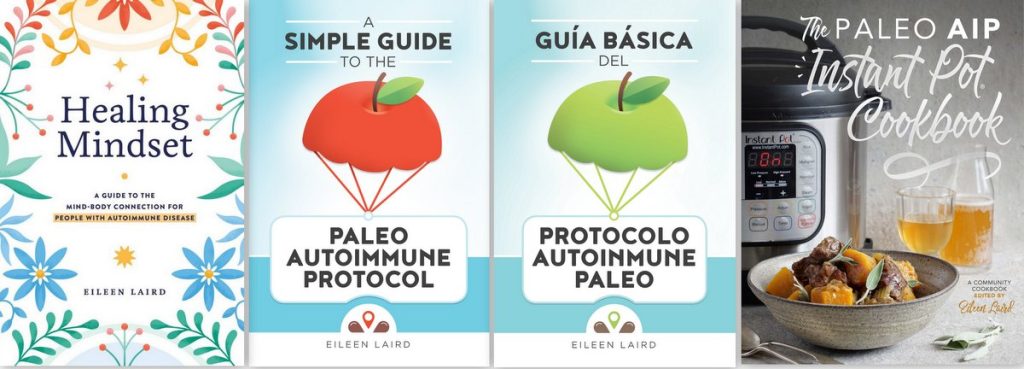
Hi Adrienne. You will never find unanimous advice when it comes to healing. All we can do is do our research and follow the protocol that makes the most sense for us as individuals. Obviously, I recommend the paleo diet. If you visited a vegan blog, they would recommend the opposite. I do have a number of friends who have seen great success with psoriasis on the Paleo Autoimmune Protocol. Here’s an article: Healing Psoriasis Using AIP. And here’s my book that tells you everything you need to know about the AIP: A Simple Guide to the Paleo Autoimmune Protocol. But in the end, only you can decide what diet is right for you. Wishing you healing, whatever you choose.
Hello,
I’m just starting the intro phase of sibo diet, SCD low fodmap. Finally realized how strict it was comparing to all I was reading. Meat, eggs, and please confirm, I can have veggies that aren’t cruciforms? And I can only have those veggies if they’re cooked, peeled and deseeded? Can I have fruit if I cook it, like berries or banana, or oranges and then puree? Can I have spices to cook with and any condiments like mustard? Lastly on the breath test I took, I could have rice, can I have rice on this intro?
Just trying to do it all properly because gosh it’s been a long 4-5 years of torture!
WOuld love any helpful tips for this phase and what I can/cannot eat.
Thanks!
Hi Noel. I’m not an expert on the SIBO diet you mentioned. I recommend checking out Aglaee Jacobs book and website, which I believe is SCD + Low FODMAP.
Hi Eileen,
Thanks so much for this site you have created.
It makes such sense of this crazy journey of food and health I have been working with. I just found your site in time for Christmas.
What a Happy Christmas for me to find some resting places, hope, community and resources. May the blessings of the season be with you. Jayashrii
Welcome, Jayashrii. I’m glad you found us, too!
Hi,
I can’t thank you enough for you post comparing the 3 diets! I am a nursing mom of a 10 month old who has eczema. I did food elimination and without dairy, eggs, gluten and peanut butter his face has improved by about 90%. I’m sure he has leaky gut and I want to heal it as soon as possible. After reading your post comparing the diets I am going to try for myself and my son the GAPS diet. I purchased the book The Heal You Gut Cook Book to helps us out. I’m planning on starting with the introduction to gaps diet. My question is when the diet says it’s ok to eat egg yoke and then the whole egg and ghee (which I’m pretty sure still has trace amounts of dairy in it) should I still avoid that for a longer period of time until his gut has had more time to heal? I would appreciate any thoughts or advice you might have on this. Thanks for all your posts! I have learned so much!
Hi Sarah. Those types of decisions are tricky and are personal choices. With GAPS, she recommends you reintroduce slowly and monitor for reactions. Egg yolks and ghee are very nutritious for anyone who tolerates them. I would avoid the egg whites and any other form of dairy for longer, though.
Fabulous and informative! Still trying to find out definitively if miso is allowed on these diets.
Soy is forbidden in all forms, but some people do cheat with tamari and miso, believing the fermentation process makes it OK. It’s an individual choice.
Great website! Any suggestions on resources for a paleo autoimmune meal plan for kiddos? We have our son (who has Celiac disease and – we believe – SIBO) on the SCD and we have seen much improvement but he still has some issues. We want to try the paleo autoimmune protocol but could use some help coming up with recipes that a 3-year-old will embrace. Thanks!
Hi Marty. Have you ever listened to the Paleo View podcast? It’s hosted by Sarah of the Paleo Mom and Stacy of the Paleo Parents. Both of them have autoimmune diseases themselves, and they both have young children. Episode 41 focused on paleo for children, including picky eaters. You can download it via iTunes, or listen to it here: http://www.thepaleomom.com/2013/05/tpv-podcast-episode-41-kids-nutrition-picky-eaters-food-sensitivities.html . You can also skim through the show notes on that page, for a summary of what they discussed, and then listen in for the details. I believe they had some good tips.
I have been reading a lot more about paleo recently, sounds very interesting! I would love for you to share this post at what i am eating http://www.townsend-house.com/2013/02/what-i-am-eating.html I think a lot of my readers would benefit from this!
Thanks for the invite, Heather. I’ll be happy to!
Hi, I found your blog through Butter Believers Sunday School Blog Carnival. I am your newest follower.
Nice to meet you, Carole.
I found your website today. It looks to be very informative!
Thanks, Charm!